
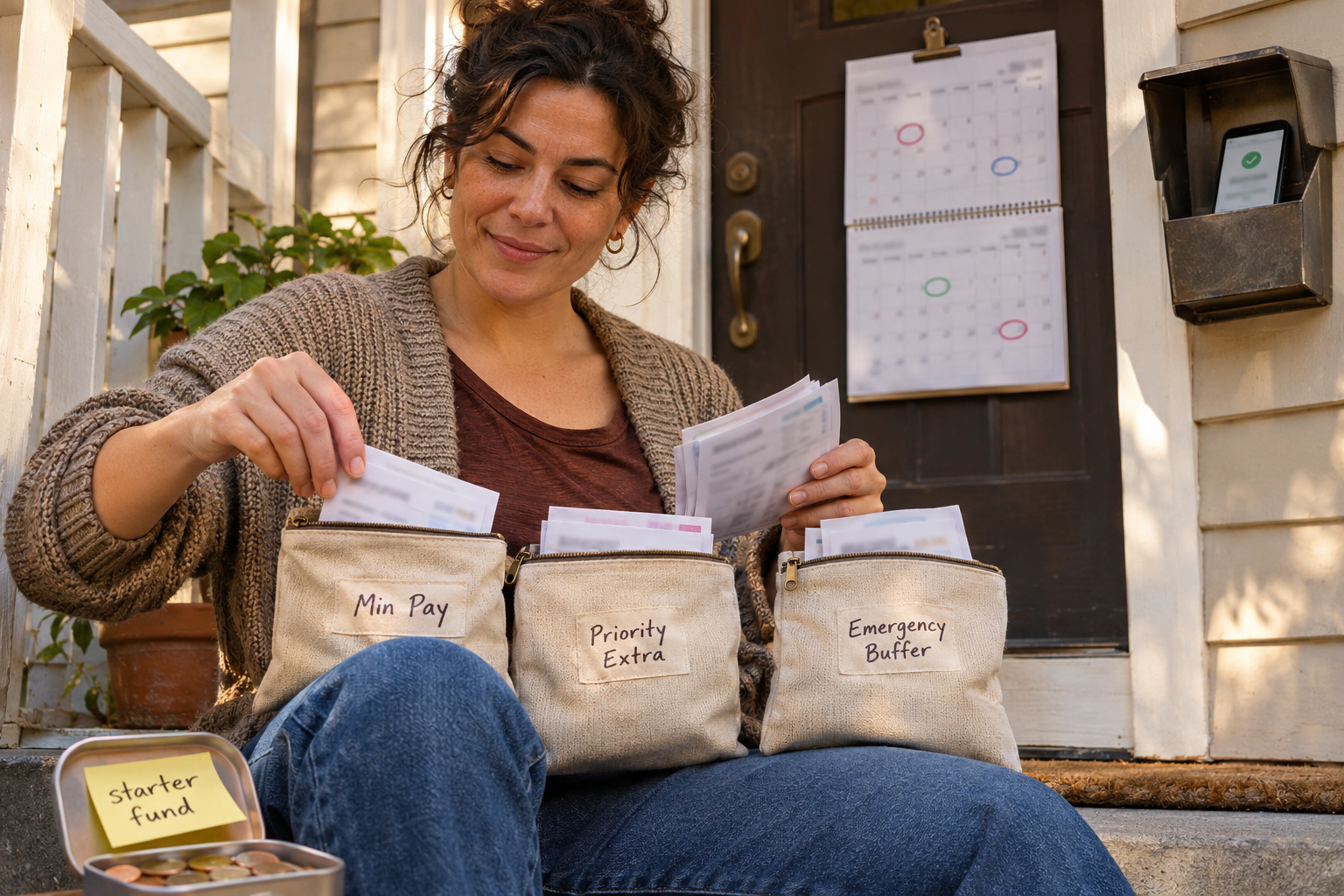
Starting to pay down everyday debt feels less daunting when you break it into clear, manageable steps. A practical plan reduces stress and protects your credit over time. This piece lays out straightforward actions you can take this month and next. No jargon—just sensible moves that fit a typical household budget.
Know where you stand
Begin with a snapshot: list every balance, minimum payment, interest rate, and due date. Seeing numbers side by side reveals which accounts cost you the most each month and which ones are close to their credit limits. Include recurring charges and subscription services so nothing surprises you later. Use a spreadsheet or a simple app—consistency matters more than complexity.
That clear list becomes your decision guide. Revisit it monthly so you can track progress and adjust as circumstances change.
Prioritize what to pay first
Decide whether to attack high-interest accounts or small balances that lift morale when closed. The interest-first method reduces total cost, while paying off small debts can build momentum and free up monthly cash. Both are valid; choose the approach that keeps you engaged long enough to finish. Avoid splitting payments randomly, which slows progress and increases interest paid.
- Interest-first (avalanche): focus on highest APR to save money over time.
- Balance-first (snowball): clear small accounts quickly to build confidence.
Either strategy beats inaction. The key is to direct any extra payment consistently toward the chosen target.
Create a small, reliable emergency buffer
One reason people return to debt is the lack of a cushion for unexpected expenses. Aim for a starter fund—often a few hundred or a month’s worth of basic bills—so you can handle surprises without adding new balances. Build this buffer before accelerating debt payments; it stabilizes progress and protects credit. Treat it as a non-negotiable line item in your monthly plan.
Once the buffer exists, you can confidently push additional dollars toward higher-interest accounts. That sequence prevents setbacks and keeps momentum steady.
Automate, trim, and grow your plan
Automation reduces missed payments and helps you stick to the plan without constant decision-making. Set up automatic minimums for all accounts, schedule an extra payment toward your priority debt, and automate transfers into your emergency buffer. Meanwhile, look for small monthly expenses to cut or renegotiate to free up more payoff cash. Even modest savings add up when redirected to debt reduction.
- Auto-pay minimums to avoid late fees.
- Schedule one extra payment each month to your priority account.
- Review subscriptions and recurring charges quarterly.
Small process changes remove friction and make the plan sustainable. Over time, those steady choices shrink balances and reduce interest burden.
Conclusion
Start with a clear list, pick a repayment strategy, and build a small emergency fund before accelerating payments. Automate where possible and trim recurring costs to free up cash. Consistency over months, not quick fixes, creates lasting relief from everyday debt.