
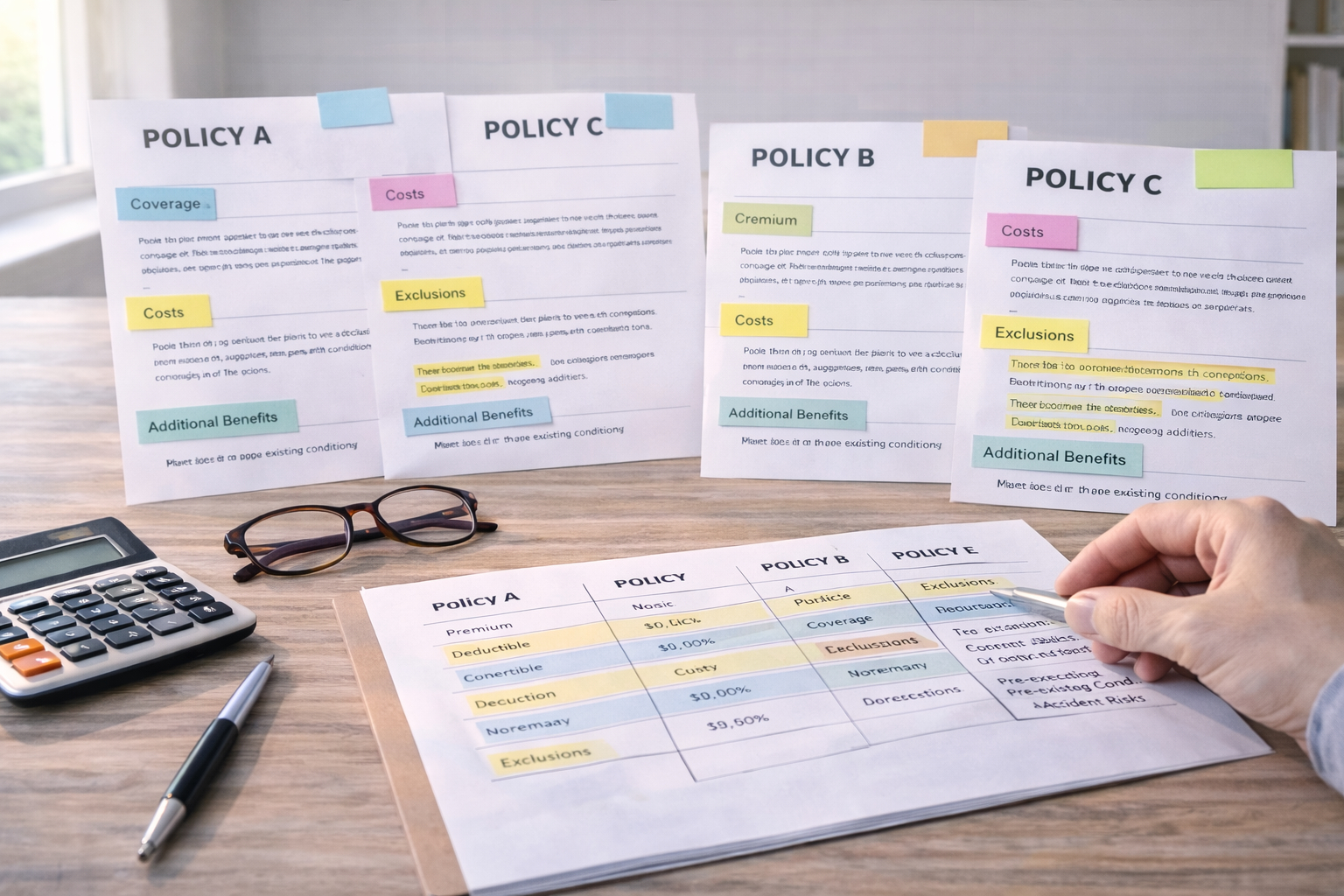
Choosing the right insurance can feel overwhelming, but a clear approach breaks the task into manageable steps. Start by focusing on what risks you need covered and which outcomes you can tolerate. Consider how coverage interacts with your budget, time horizon, and personal tolerance for uncertainty. A few disciplined comparisons will reveal policies that align with your priorities.
Begin with a realistic view of your needs and resources. Clear priorities make the rest of the process faster and more meaningful.
Define Your Priorities and Risk Tolerance
List the outcomes that matter most: avoiding large unexpected costs, protecting income, or preserving assets. Decide which gaps you can accept and which would be financially or emotionally disruptive. Time horizon matters too; short-term needs and long-term protection often point to different policy designs. This clarity guides which features deserve more attention.
Documenting priorities also helps when comparing multiple quotes. It keeps decisions aligned with real needs rather than short-term price swings.
Understand Core Policy Elements
Know the basics of what a policy includes: covered perils, exclusions, limits, deductibles, and riders. Exclusions and limits can materially affect how a policy performs when you need it most. Deductibles trade lower premiums for higher out-of-pocket risk, so evaluate that balance carefully. Riders and endorsements can fill critical gaps but add cost.
Reading sample policy language or summaries prevents surprises later. When in doubt, ask for plain-language explanations of any unclear terms.
Compare Total Cost and Real Value
Look beyond premium alone and estimate total expected cost over time, including likely claims, deductibles, and premium increases. Consider scenarios: a small claim, a major loss, and multiple moderate incidents to see how each policy responds. Check company reputation for claims handling and financial strength because prompt, fair payments matter most. Value combines policy terms with the insurer’s reliability.
- Compare annual premiums and projected out-of-pocket costs.
- Factor in discounts, bundling, and claim experience.
Make choices that reflect both price and the practical ability to recover after a loss. Cheaper coverage can be false economy if it performs poorly when needed.
Ask Targeted Questions Before You Buy
Prepare a short list of questions for agents or carriers: how exclusions apply, example claim timelines, and any circumstances that could void coverage. Verify renewal practices, potential rate drivers, and the process for filing and resolving disputes. Request written confirmations of verbal assurances to avoid misunderstandings. Clear answers reduce hidden risk.
Use answers to refine your comparison and to build confidence in the final purchase. Transparency at this stage prevents costly surprises later.
Conclusion
Choose insurance by matching clear priorities to policy features and company reliability. Compare total cost, not just the sticker premium, and confirm terms with targeted questions. This methodical approach reduces stress and yields coverage that truly protects you.