
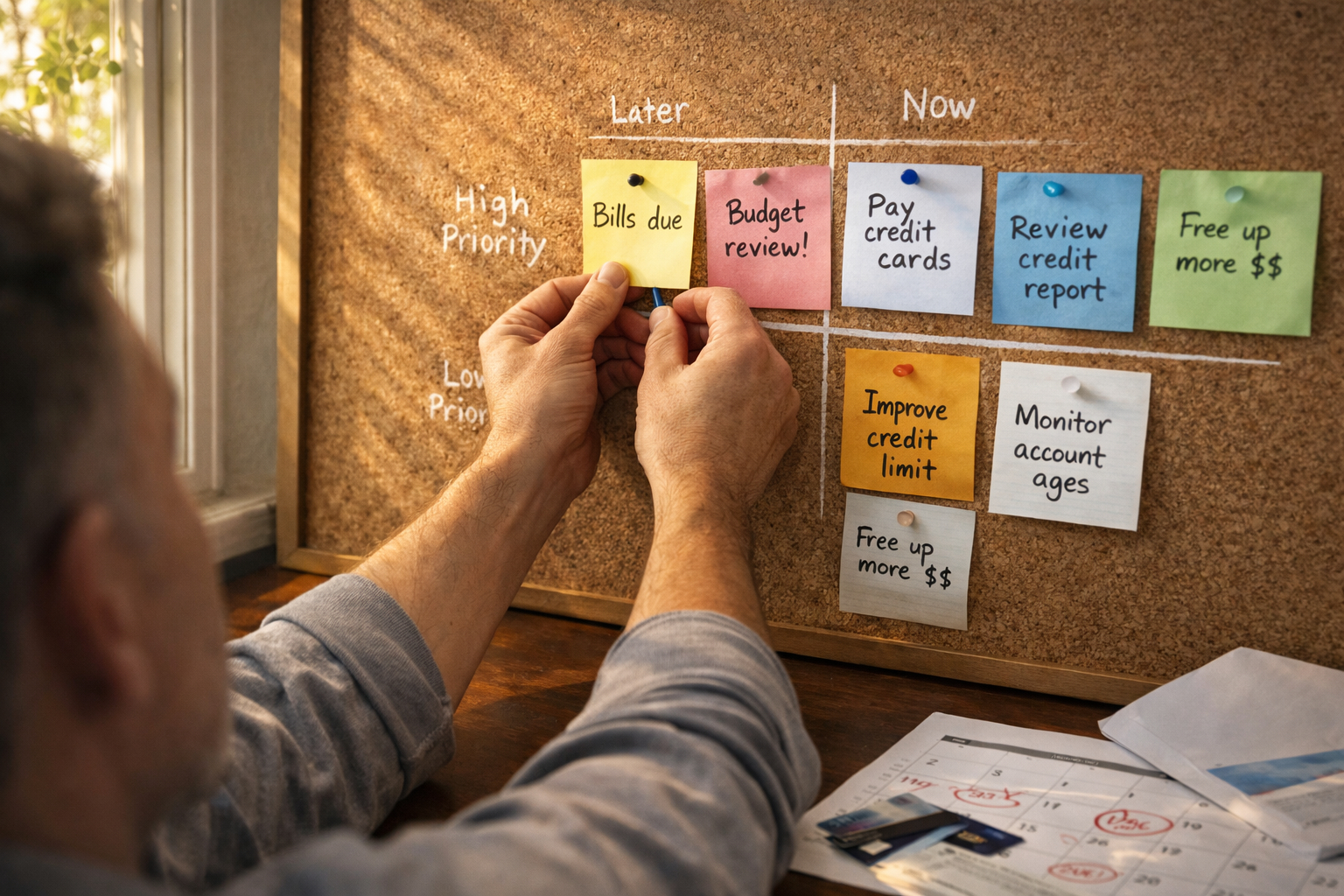
Improving a credit score is rarely a single action; it is a sequence of prioritized steps applied consistently. This article breaks those steps into manageable monthly tasks so you direct effort where it moves the dial. By identifying high-impact items first and maintaining steady monitoring, you can avoid wasted effort and sudden setbacks. The goal is progress, not perfection, and a clear plan helps maintain momentum.
Identify High-Impact Tasks
Start by identifying which factors are most likely to affect your score: payment history, credit utilization, account age, and new inquiries. Payment history typically carries the most weight, so resolving missed payments and setting automatic payments is a priority. Next, focus on utilization on revolving accounts, aiming to keep it low relative to limits. These assessments let you rank tasks by expected benefit versus effort.
Choose two or three priorities that are realistic for the month and track completion. Small focused wins build confidence and compound into larger score improvements.
Monthly Checklist to Focus Efforts
Establish a short checklist you can review each month to keep priorities visible and actionable. Include items you identified as high-impact, like bringing accounts current, paying down a specific credit card balance, or disputing one error on a report. A compact checklist reduces decision fatigue and makes it easier to measure progress. Consistency is more important than trying to do everything at once.
- Confirm all payments scheduled and paid on time.
- Reduce utilization on one or two high-balance cards.
- Review credit reports for inaccuracies and flag issues to dispute.
At month end, review what moved and what stalled, then adjust next month’s checklist accordingly. Regular refinement keeps your plan aligned with results.
Keep Utilization and Payments in Balance
Managing utilization means more than lowering balances; it requires timing payments and reallocating available credit strategically. If you carry balances, prioritize payments on cards with the highest utilization percentage. Consider making mid-cycle payments to reduce reported balances and prevent spikes. Avoid opening new accounts solely to increase available credit unless it fits a longer-term plan.
Maintaining on-time payments while reducing utilization yields steady score gains. Balancing both reduces risk of short-term setbacks.
Monitor Reports and Correct Mistakes
Regular monitoring uncovers errors or unexpected changes quickly so you can act before they do lasting damage. Check each bureau report at least once a quarter and set alerts for significant account changes. When you find inaccuracies, follow the recommended dispute channels and keep records of correspondence. Timely disputes and confirmations of corrections will reflect in future score updates.
Monitoring also highlights trends you can address proactively, turning surprises into planned corrections. That habit protects gains you work to achieve.
Conclusion
Prioritizing credit tasks turns vague goals into repeatable habits that produce measurable results. Focus on high-impact actions, maintain a simple monthly checklist, and monitor reports to catch errors early. Over time, steady, prioritized effort builds durable credit strength.