Introduction Insurance should support how you live day to day, not be a source of confusion or wasted premium. Begin by imagining the disruptions a loss would create and work backward to the coverages that restore normal life quickly.…


Introduction Insurance should support how you live day to day, not be a source of confusion or wasted premium. Begin by imagining the disruptions a loss would create and work backward to the coverages that restore normal life quickly.…

Introduction Choosing insurance that protects your household without gutting monthly cash flow is a balancing act. Small changes in premiums, deductibles, or limits can either free up budget or leave you exposed when a loss happens. This article outlines…

Introduction Insurance decisions are most useful when they speed recovery, limit disruption, and fit a household budget. Framing coverage around what keeps your life running after a loss makes trade-offs clearer. This approach helps prioritize premiums toward policies that…

Introduction Insurance is most valuable when it prevents day-to-day routines and financial plans from collapsing after an unexpected loss. Start by identifying the household functions—like shelter, reliable transportation, childcare, and income—that you would struggle to replace quickly. Focus on…
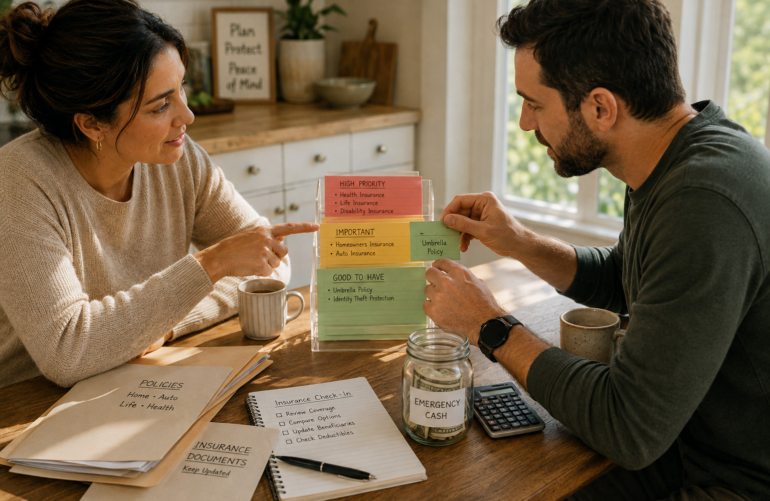
Introduction Insurance can feel overwhelming when budgets are tight and risks vary across daily life. A simple triage approach helps you focus on coverages that restore function quickly after a loss. This article outlines how to rank protections by…

Introduction Insurance works best when it supports quick recovery, not when it creates more friction after a loss. Start by thinking about what must be fixed or replaced immediately to keep your household functioning. Consider cash flow shocks, physical…

Introduction Insurance is a tool to transfer risk, not to prevent every setback. Deciding what to insure means weighing how a loss would affect your cash flow, daily routine, and long-term plans. Some losses are cheap to absorb yourself,…

Introduction Insurance decisions are most effective when they follow a clear framework rather than impulse or fear. This article outlines practical steps to evaluate coverage by impact, cost, and recoverability. The goal is to help households prioritize protections that…

Introduction Insurance often serves two practical goals: preserving cash flow and restoring daily life quickly. When money is limited, prioritizing the protections that prevent immediate financial collapse makes sense. This piece explains a straightforward order to evaluate coverages based…

Introduction Insurance is a tool to reduce financial disruption when the unexpected happens, not a way to eliminate all risk. Choosing coverages that support cash flow and quick recovery makes day-to-day life more resilient. This article outlines practical coverage…