
When it comes to personal finance, two terms often get mixed up—credit score and credit report. While they are closely related, they serve different purposes in showing your financial health. Understanding the difference is key to managing your credit responsibly.
What Is a Credit Report?
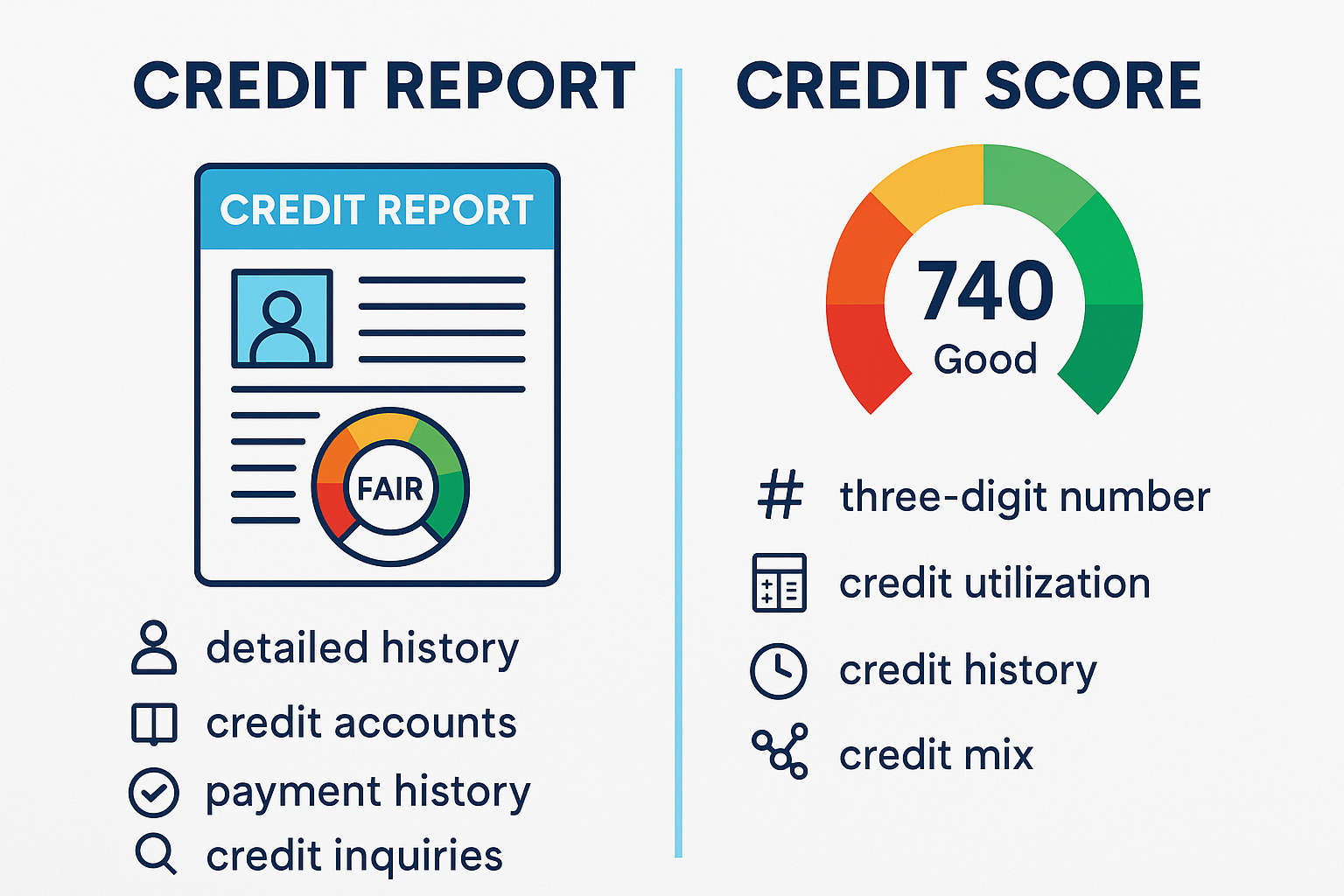
A credit report is a detailed record of your credit history. It is compiled by credit bureaus and includes:
-
Personal details (name, address, Social Security number or ID)
-
Open and closed credit accounts (credit cards, loans, mortgages)
-
Payment history (on-time or missed payments)
-
Credit inquiries (when lenders check your credit)
-
Public records (bankruptcies, liens, judgments)
In short, your credit report is like a financial report card, showing how you’ve managed credit over time.
What Is a Credit Score?
A credit score is a three-digit number (usually ranging from 300 to 850) that summarizes the information in your credit report. It’s calculated using factors like:
-
Payment history (most important)
-
Credit utilization (how much of your available credit you use)
-
Length of credit history
-
Types of credit (credit mix)
-
Recent credit inquiries
Think of your credit score as the grade you get from your financial report card. Lenders use it to quickly assess how risky it might be to lend you money.
Key Differences Between Credit Report and Credit Score
-
Format:
-
Credit Report → A detailed history of your credit activity.
-
Credit Score → A number summarizing that history.
-
-
Purpose:
-
Credit Report → Provides the full picture of your financial behavior.
-
Credit Score → Offers a quick snapshot of your creditworthiness.
-
-
Access:
-
You can request free credit reports (usually once a year from major bureaus).
-
Credit scores are often provided by banks, credit card companies, or for a small fee from credit bureaus.
-
-
Use by Lenders:
-
Lenders may review both, but the score is the first filter.
-
The report gives them context if needed.
-
Why Both Matter
-
A strong credit report leads to a higher credit score.
-
Lenders may look at your score for quick approval but review your report for deeper insights.
-
Errors in your credit report can lower your score, so it’s important to check and correct inaccuracies.
Final Thoughts
Your credit report and credit score go hand in hand. The report tells your financial story, while the score gives it a quick summary. By making timely payments, keeping balances low, and monitoring your credit regularly, you can maintain both a healthy report and a strong score.