
Introduction
Managing irregular paychecks requires a clear, repeatable approach rather than occasional scrambling. Start by mapping the timing and size of incoming funds for the next few pay periods. From that picture you can prioritize obligations and decide where temporary adjustments are safest. A simple framework reduces stress and keeps essentials covered while you rebuild steadier reserves.
Assess Your Incoming Cash
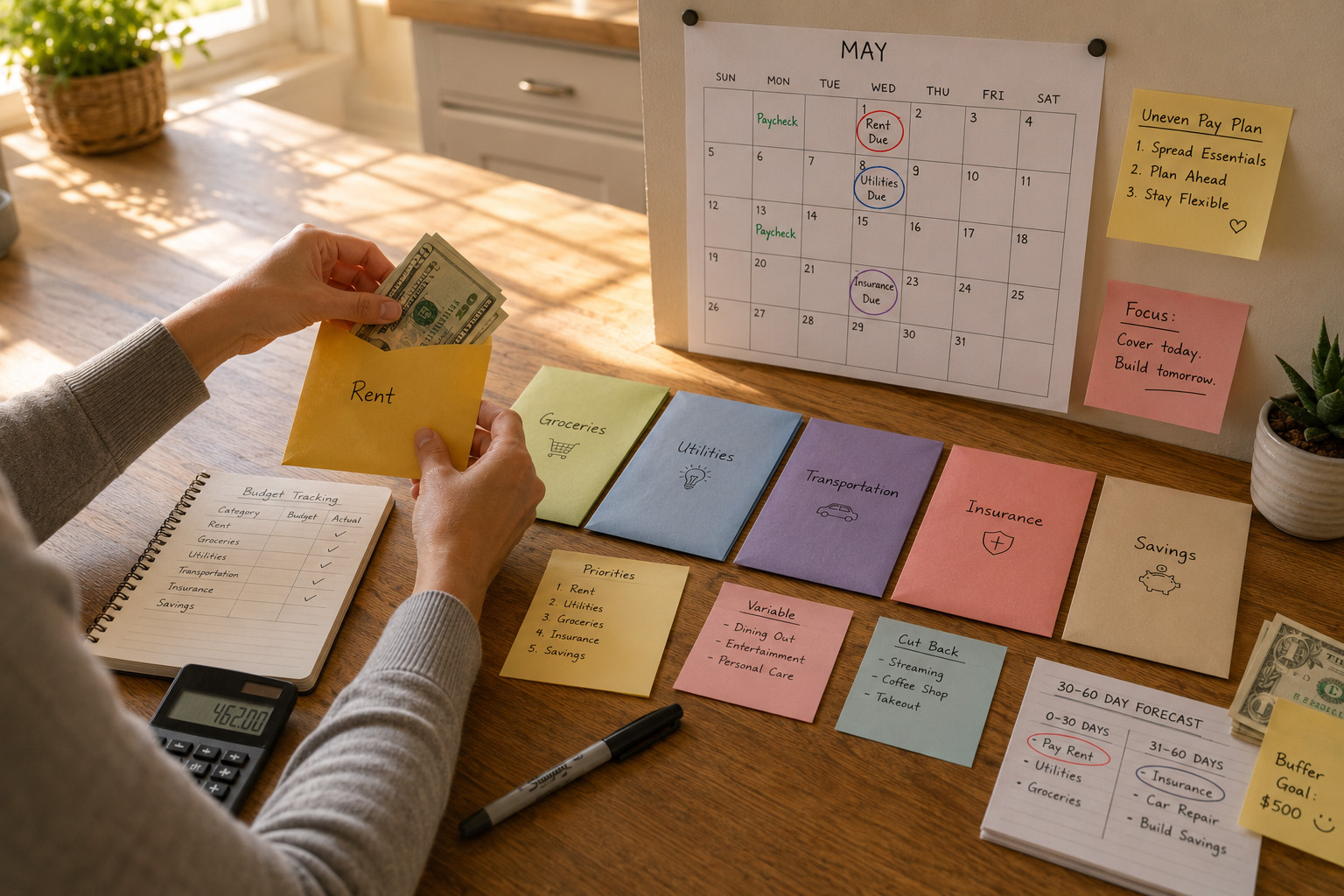
Begin with a short forecast covering at least the next 30 to 60 days and include every expected deposit. Note exact dates and amounts so you can see any gaps between income and fixed obligations. This visibility helps you identify which due dates may need adjustment and where one paycheck will have to stretch. Keep this forecast updated as deposits arrive or plans change.
Use the forecast to decide immediate priorities and to communicate with billers if needed. A clear record makes conversations about modified due dates or partial payments more effective. Treat the forecast as an operational tool, not a one-time exercise.
Prioritize Essential Payments
With limited cash, protect the essentials first: housing-related obligations, utilities that keep basic services running, transportation you need to work, and minimal food spending. Smaller or flexible items such as subscriptions, nonurgent repairs, and discretionary purchases can wait. Prioritize bills by their consequence: late fees, service interruption, or impacts on employment come first. This hierarchy helps you focus scarce dollars where they matter most.
- Housing (rent or mortgage)
- Utilities and essentials
- Work-related expenses and insurance
- Minimum debt payments to avoid penalties
When communicating with creditors or service providers, be honest and specific about timing. Many will offer short-term accommodations if you present a realistic plan.
Trim Discretionary Spending Quickly
Identify three small, reversible cuts that free up cash this period: pause two subscriptions, delay dining out, or choose lower-cost grocery options. Small changes compounded over a couple of paychecks can cover a critical bill or create a tiny buffer. Focus on actions you can sustain for the short window rather than drastic lifestyle overhauls. Quick wins build momentum and reduce the need for high-cost borrowing.
Track the savings from each adjustment so you can see progress and restore items when income stabilizes. Reassess after every paycheck and adjust the cuts as needed.
Automate Simple Rules to Stabilize Cash
Create straightforward, repeatable rules: split each deposit into fixed buckets for essentials, savings, and variable spending; always hold one paycheck worth of cash as a buffer; and set alerts for upcoming bills. Automation reduces decision fatigue and prevents accidental overspending. Even modest automation—two transfers set up once—can maintain order across uneven pay cycles.
Start small and iterate the rules based on what you learn from actual cash flow. Over time the system will require fewer manual interventions and give you steady control.
Conclusion
Facing irregular income is easier with a simple forecast, clear priority rules, and small, sustainable cuts.
Automate the steps you can and keep one paycheck as a short buffer.
Repeat the process each pay period to restore steadier financial footing.