
Introduction
Keeping a steady credit score is less about rare big moves and more about reliable, repeatable habits.
Building a simple monitoring routine reduces surprises and focuses effort where it matters most.
This article outlines a clear, repeatable process to track credit factors, correct issues, and make incremental monthly improvements.
Use these practical steps to protect your score and support your longer-term financial plans.
Why ongoing credit monitoring helps
Regular monitoring surfaces errors, unusual activity, and trends before they become major problems. By checking key elements such as balances, payment history, and open accounts, you can spot patterns that affect score movement. Monitoring also helps prioritize actions: whether to reduce utilization, dispute a reporting error, or avoid new hard inquiries. Over time, consistent attention converts into steadier, more predictable credit performance.
Adopting a simple review rhythm reduces stress and prevents small issues from compounding. It also builds confidence in financial decision making.
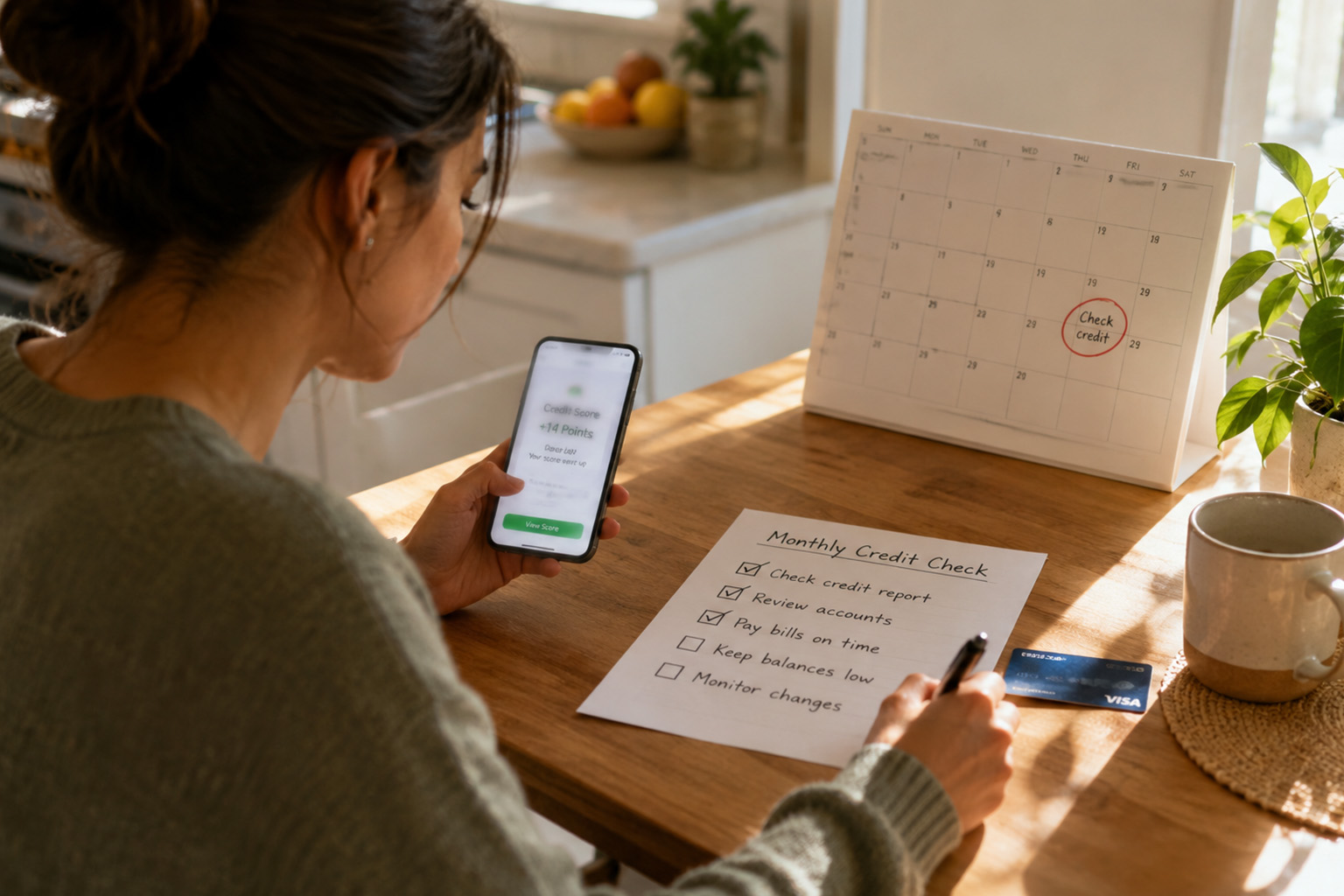
A simple monthly checklist
Create a short, repeatable checklist that you can complete each month in under 20 minutes. Focus on a few high-impact items: verify recent payments posted on time, confirm balances on revolving accounts, scan your report for unexpected accounts, and note any upcoming statement dates or large scheduled payments. Keeping the checklist concise increases the chance you will follow it consistently.
- Confirm all required payments posted on or before the due date.
- Keep utilization on major cards under a planned threshold for reporting.
- Flag any unfamiliar accounts or hard inquiries for investigation.
- Record progress in a simple log to track trends month to month.
A checklist turns monitoring into a habit and gives clear next steps when you identify an issue. Small monthly adjustments compound into measurable improvements over time.
Automate, review, and adjust
Automation reduces manual work and catches routine items: set auto-pay for required minimums and enable alerts for high balances or unusual activity. Use automated credit alerts sparingly to avoid notification fatigue, selecting only the signals that matter most. Schedule a monthly review to interpret alerts and decide which items require action versus those that can wait. Periodic adjustments to thresholds or the checklist maintain relevance as your financial situation changes.
Combine automation with a short monthly review to stay informed without being overwhelmed. This balance helps you maintain control while freeing time for higher-priority financial planning.
Conclusion
Set up a short monthly routine and a concise checklist to keep credit performance on track.
Leverage automation for routine tasks, then review alerts and trends to guide actions.
Consistent, small steps build reliable credit strength over time.